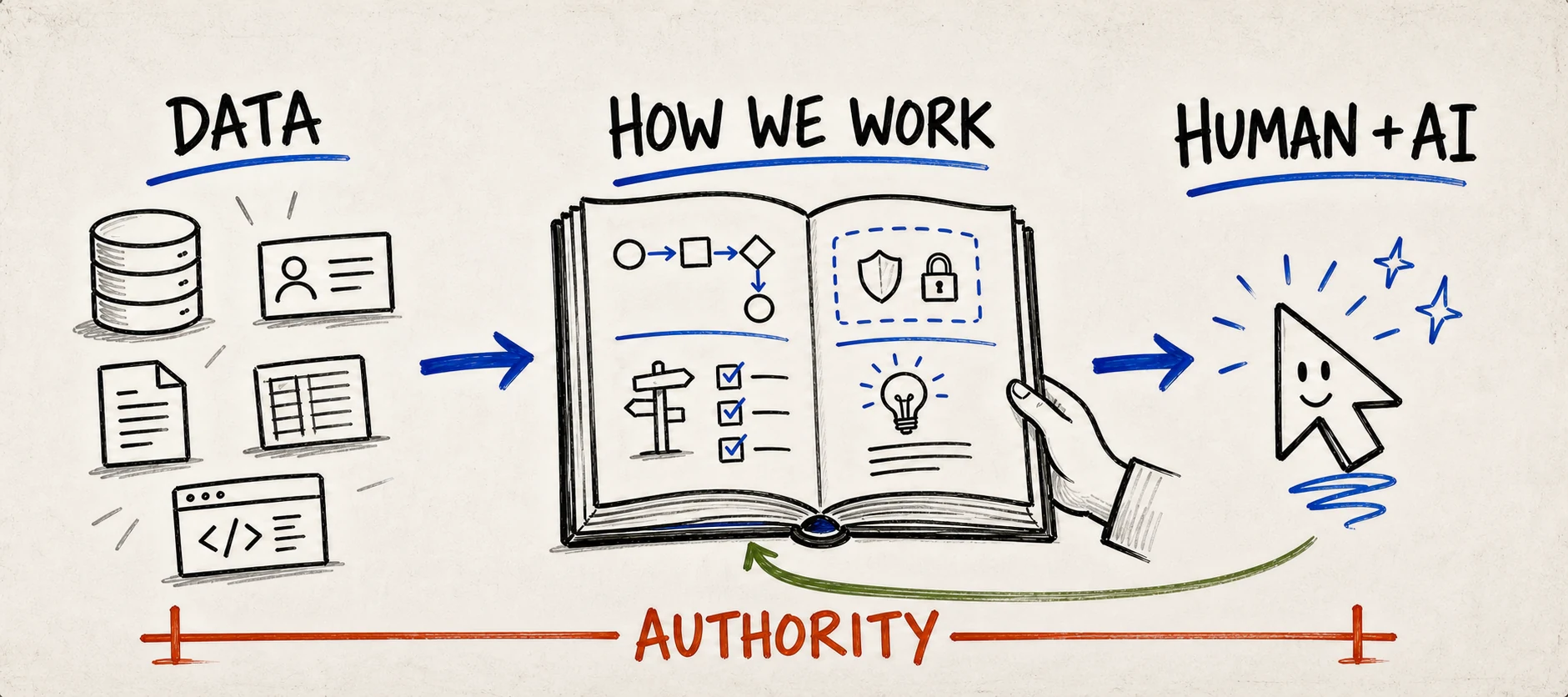
The Missing Layer Between AI Agents and Company Data
I am building Mainmind: a governed knowledge layer that gives people and AI agents the same account of how a company works, without trapping that knowledge inside any model or application.
Writing
Long-form notes for builders and leaders turning emerging capability into reliable software: agent experience, evaluation, enterprise platforms, distributed systems, and the judgment behind technical decisions.
I am building Mainmind: a governed knowledge layer that gives people and AI agents the same account of how a company works, without trapping that knowledge inside any model or application.

We keep bolting rigid systems around agents. The better architecture is a firm organizational core with a disposable, evolving harness around it.
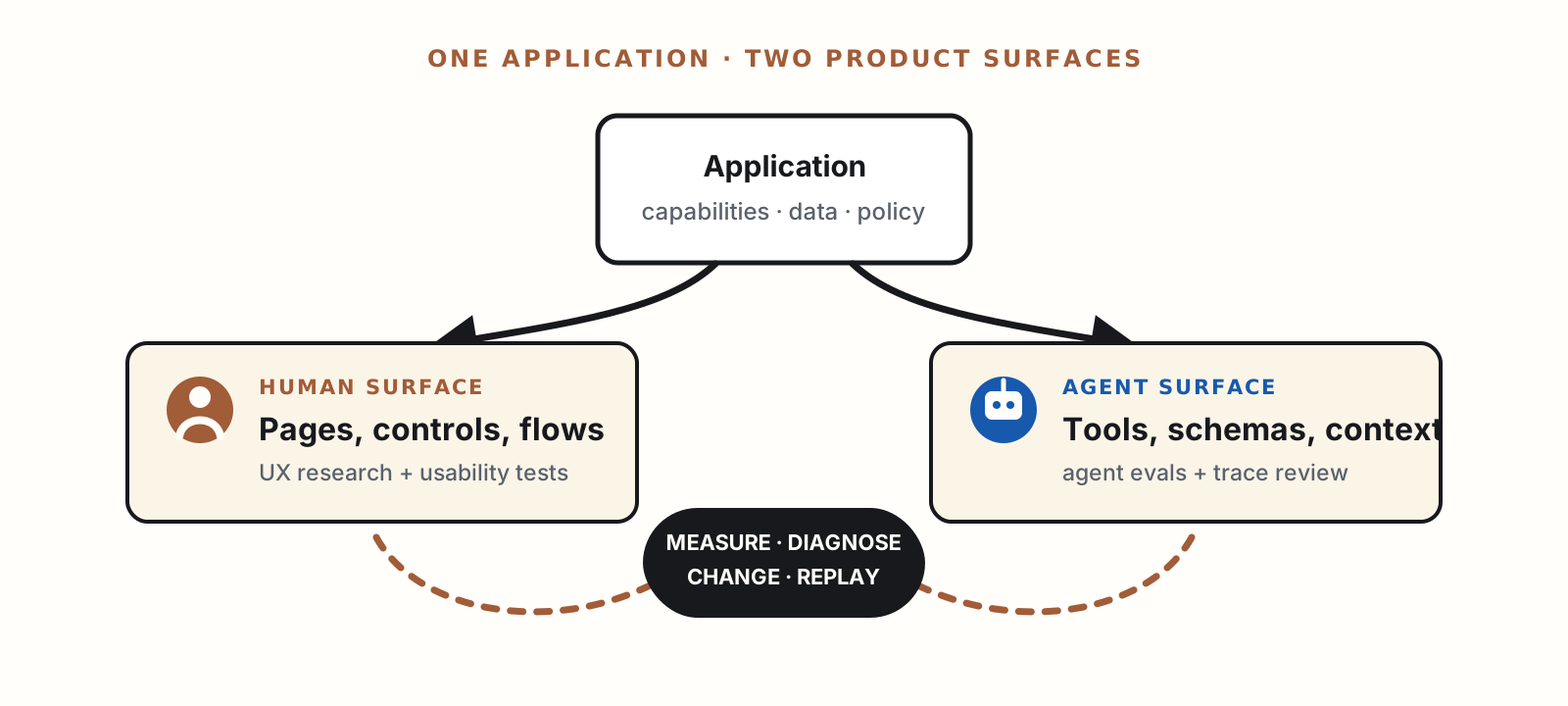
Agent experience is not an alternative to agent evals. It is the product surface those evals should help us diagnose and improve.
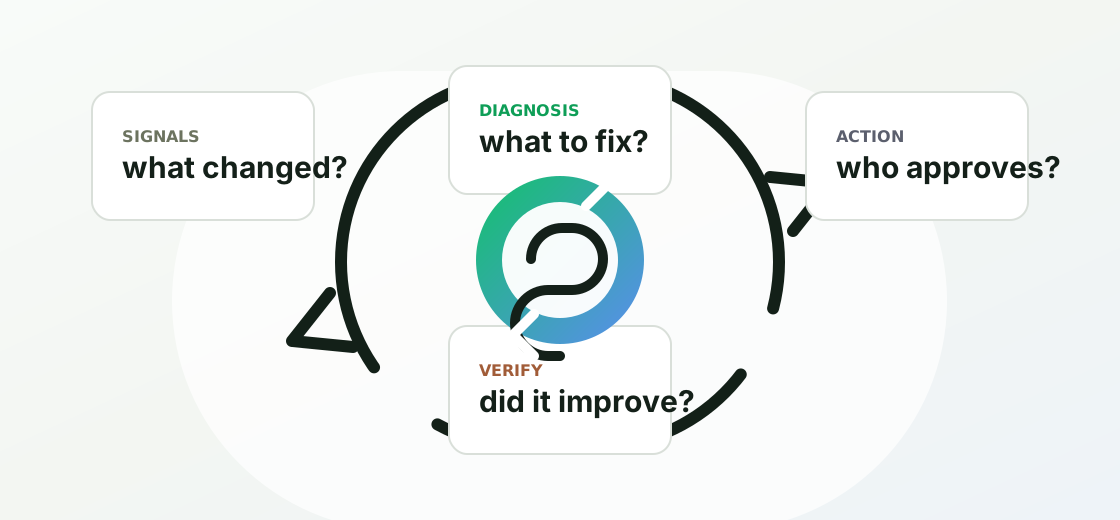
DevOps made shipping and operating software a continuous discipline. LoopOps is the next step: making improvement itself a first-class, measurable loop for humans and agents.
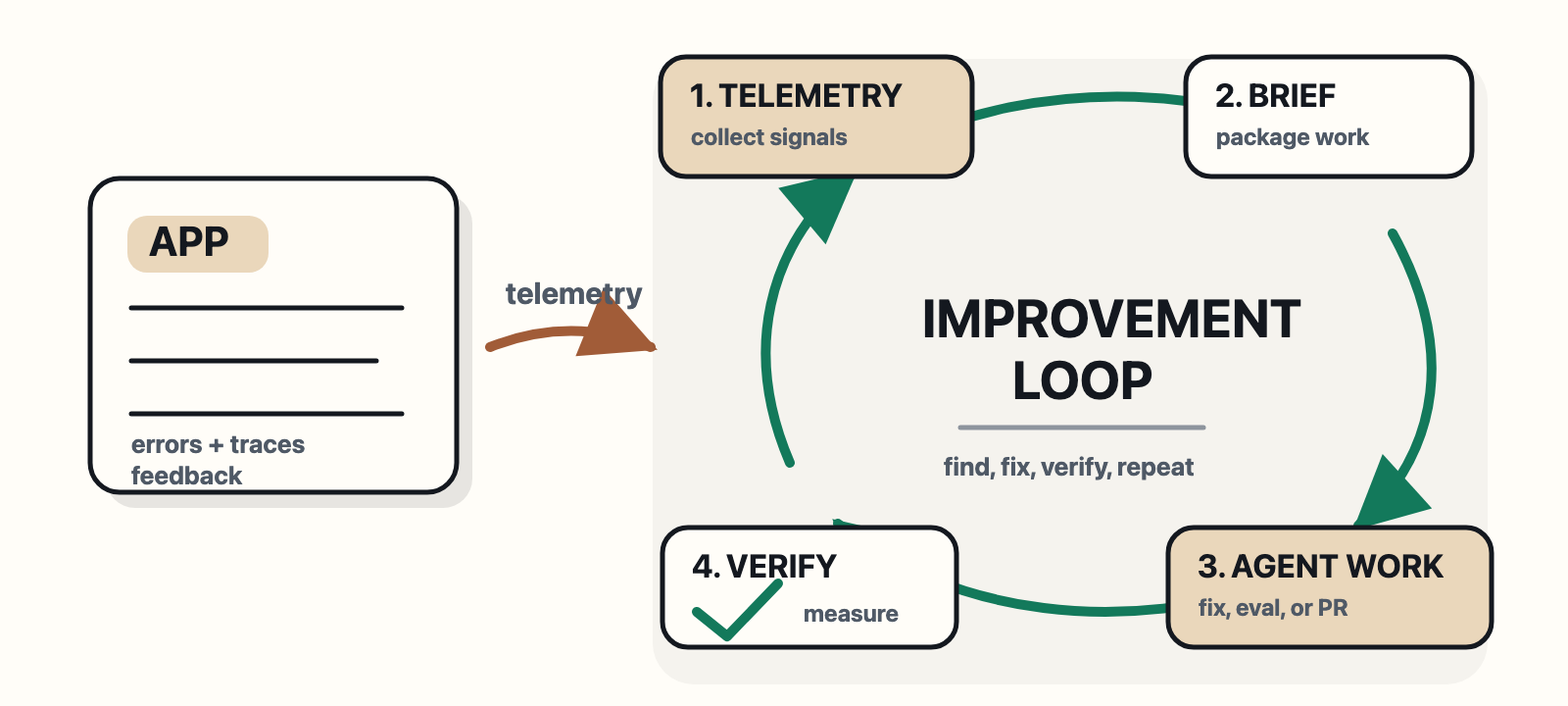
Telemetry should not end at observability. As software teams add coding agents and agentic workflows, telemetry needs to become the evidence layer that helps products get better.
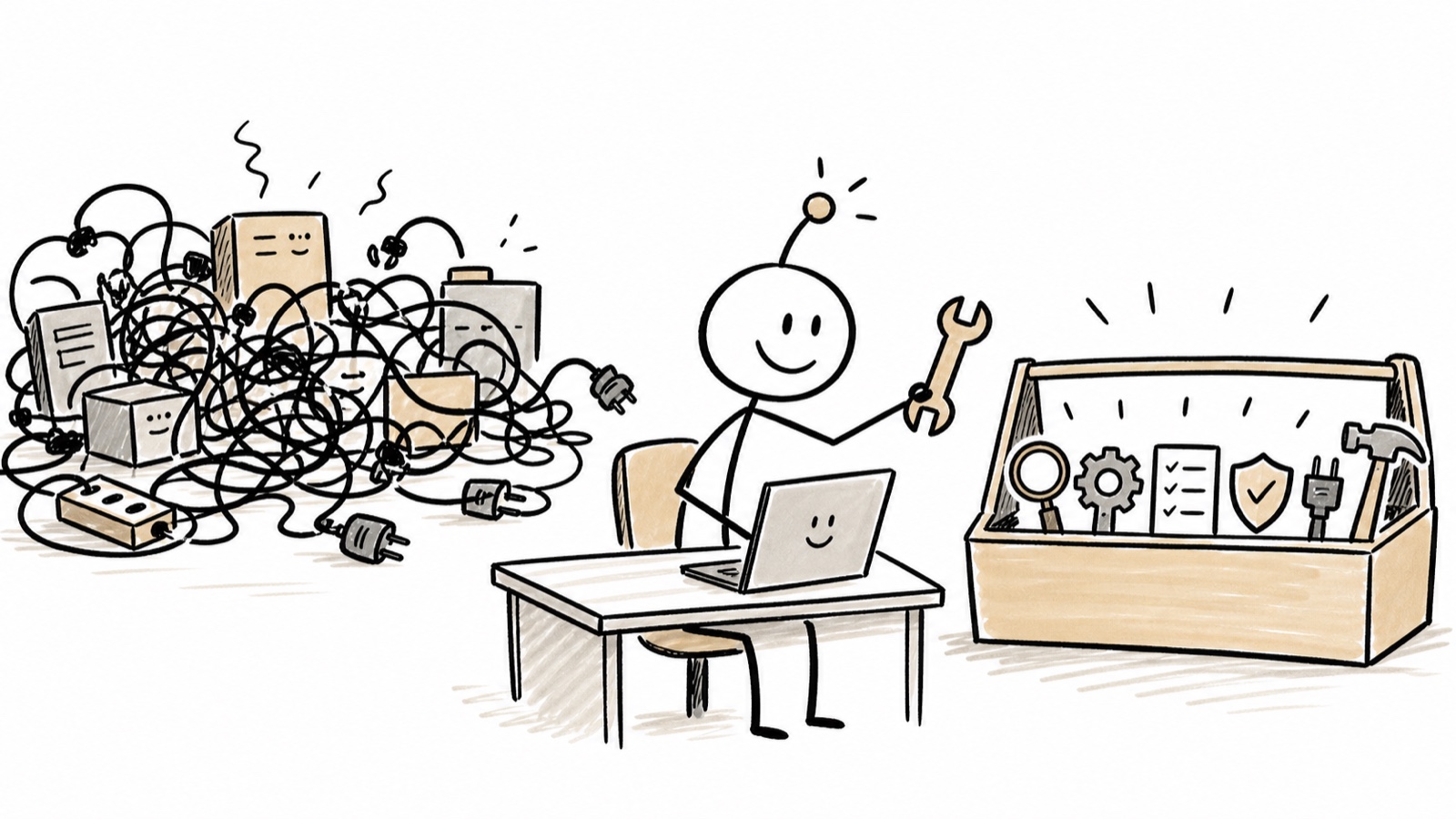
More tokens, more context, and more connectors do not automatically create better AI products. Agent experience borrows from user experience and developer experience, but agents need a working environment for every kind of operational task.

The senior part of AI engineering is not knowing every model release. It is owning the product, system, risk, and organizational judgment that turns model capability into durable software.

Enterprise agents need more than tools and prompts. They need ownership, evaluation, permissions, observability, and a rollout model that matches the risk of the workflow.
Every abstraction is a trade-off. Here's how to identify when your beautiful, clean code is silently destroying performance—and what to do about it.

WebAssembly isn't just another compile target—it's a paradigm shift that's quietly revolutionizing how we think about performance, portability, and the future of computing.

Distributed systems break our intuitions about computing. Here are the mental models that help me reason about complex, distributed architectures without losing my sanity.